Testimonies to Sister Janice McLaughlin on the occasion of the publication of her book ‘The Color of the Skin doesn’t Matter’: A Missioner’s Tale of Faith and Politics
presented at a Zoom discussion on Thursday 14 October 2021
by
Weaver Press <www.weaverpresszimbabwe.com>
and introduced by Murray McCartney
Chipo Chung will begin our afternoon’s discussion with a short passage from the book.
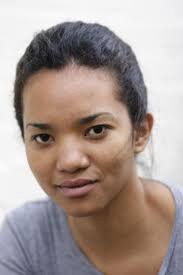
Chipo is Janice’s god-daughter. She was born as a refugee in Dar es Salaam, and spent her first two years in refugee camps in Mozambique. She went to school in Zimbabwe, began acting with the Harare theatre group, Over the Edge, and in London subsequently studied directing at Yale University and acting at RADA.
Since then her career as an actor has been as varied as it has been successful.
Good afternoon. I am Chipo Chung and I am honoured to be here at the launch of Janice’s book. When you red this book, Janice’s voice comes through as if
you were listening to her speak. I have missed her over these past months. but reading her memoir was like talking to her, gaining insights of humour, liveliness and humanity that made Janice, Janice.
There were many sections that I could have read from but I thought I would read some passages from her Postscript which detail the many occasions on which she was called on to speak and she was highly skilled at talking ex tempore and also worked hard at her thoughts, words and phrases in her planned speeches. I imagine if she were here at the launch of her memoir, she would have read something like this:
Not many young women took the road to religious life, even back in the 1950s and early 1960s when vocations to be sisters, brothers and priests flourished. From an early age, however, I knew that I wanted something different from my parents and my classmates; something perhaps more exciting, more heroic. I grew up in a Catholic environment, reading the lives of the saints and wanting to follow their example, to death if necessary! ... ... ... I never looked back. Although, as mentioned above, I found some of the medieval practices in our training bizarre, I believed they were meant to toughen us and prepare us for a rigorous life. I was somewhat superstitious, believing that if I turned back, I would suffer the fate of Lot’s wife who was turned into a pillar of salt for looking back at the destruction
of Sodom and Gomorrah! This warning, crazy in retrospect, found fertile ground in my imagination and helped me persevere when others were leaving. .........
The thought of marriage and children could never compete with my glorified notion of being a missionary to distant lands, preferably to Africa. Although my parents’ marriage had not been ideal, they showered Mary Ellen and me with love and trust and gave us freedom to choose our own path. Before my father died, I overhead my mother saying to him: ‘Paul, whatever went wrong between us we did right by our girls.’ My father nodded yes and smiled. ... ... ...
I tended to view marriage and domestic life as a prison for women. The title of Maya Angelou’s autobiographical story, I Know Why a Caged Bird Sings, struck a chord with me. My mother kept singing but lost much of her own melody; my father’s voice was also distorted as my parents struggled to bridge the vast differences between them. I also heard the tearful tales of Kenyan and Zimbabwean women who shared their stories of domestic abuse and infidelity with me. When I considered changing paths, it was not for marriage and family life but for a political career, perhaps as a member of Congress in the United States, working with an international organization such as the United Nations, becoming a human rights lawyer or a journalist for a reputable newspaper. I never seriously explored these roads, however, as I was basically content in my vocation and able to do many of the same things that I could have done as a single independent woman.... ... ... Maryknoll enhanced this budding awareness of the causes of inequality and added an international dimension to my understanding. I learned tools of social analysis and participated in a group that looked at various US industries, such as the media, to trace the ownership and the interlocking links between various corporations. With Paulo Friere, I learned to trace the root causes of poverty by asking the simple question
– why. ‘Why don’t you come to school?’ ‘Because I have no shoes.’ ‘Why do you have no shoes?’ ‘Because my father lost his job.’ ‘Why did he lose his job?’ ‘Because the company where he worked was bought out by another.’ Why, why, why?
My last ministry before leaving Zimbabwe in May 2020 was in combatting human trafficking with the African Forum for Catholic Social Teaching (AFCAST) at Arrupe Jesuit University. I found it one of the most enriching experiences of my life. Gogo (Grandma) was my new name as I came to know and respect the courage and resilience of each of the women who had been trafficked to Kuwait. Getting to know and work side by side with survivors of trafficking was the highlight of my sixty years as a Maryknoll Sister.
None of these steps along the road was organised or planned by me. Rather, like St. Paul
at Damascus, I was constantly thrown from my horse and shown the way to go. While I was influenced by racist attitudes and structures in the United States, I have not lost my belief in the possibility of creating a non-racial society of equals where the color of the skin will not matter. I look back with gratitude at the rich journey and on the people who have opened my eyes to see the world through a new lens. Each step has made a difference in my life.
‘I took the road less travelled by and that has made all the difference!’
***
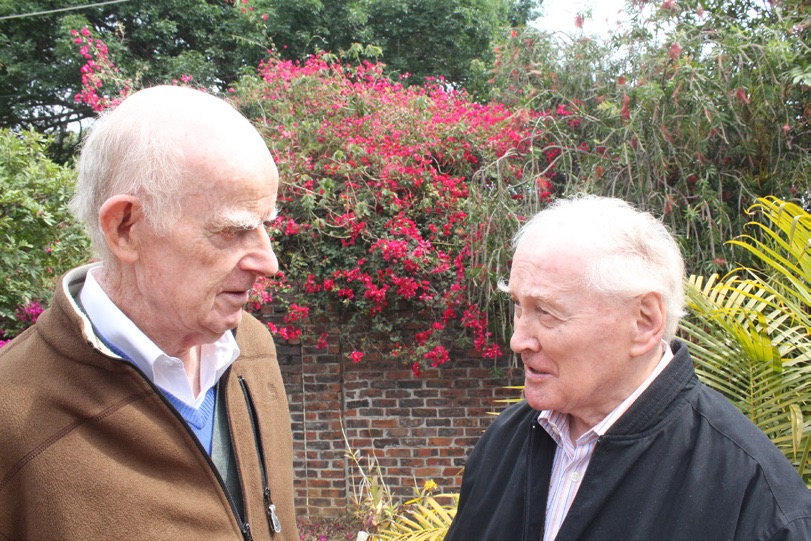
Dieter Sholz has written about Zimbabwe in the 1970s and the work of the Catholic Commission for Justice and Peace. Dieter is a Jesuit priest, a former Bishop of Chinhoyi, and was an active member of the CCJP during the war. As his eyesight is now poor, his contribution will be read for him by Father David Harold-Barry.
Father David, also a Jesuit priest, first came to this country, from Ireland, in 1956. He spent twenty-five years in Silveira House, a Leadership Training and Development Centre , wrote a column for The Zimbabwean newspaper, and has written and edited several books including Zimbabwe: The Past is the Future, published by Weaver Press.
Sr Janice McLaughlin, who died aged 79 in March, was from the New York based Maryknoll Society of Missionary Sisters. She was unusual in that she was not a teacher, nurse or worker in a parish. Hers was a broad view of ‘mission’ as engagement with people whose desire for justice was thwarted by political and social structures. From an early age, she tells us in her memoir, ‘The Color of Skin doesn’t Matter’, she found herself drawn to Africa, where the struggle for justice and dignity were, in the 1960s, most acute. From the moment Janice arrived in Tanzania in 1969, this desire to work for justice was the driving force and passion of her life. Her entry point was journalism, both in teaching and practicing it.
Reading her book, one is astonished at her courage in becoming involved without seeming to hesitate. She tells us she might agonise for days over what to wear at some function but for often risky and dangerous decisions, she decided immediately. Her enthusiasm even led her to be careless about her own safety and, when she was in Rhodesia, she left incriminating evidence lying around. Later, in prison, she lamented how her diary was read out in court and implicated others.
This book shows the variety of initiatives in which Janice was involved and where she was often among the prime movers. For a short while, at the time of her imprisonment and deportation in 1977, she was an international celebrity but she understood the ephemeral nature of this publicity and quickly returned to Africa and entered into the raw life of the refugee camps. Before and after the Independence of Zimbabwe in 1980, she worked to bring education to the refugees and displaced people both in Mozambique and later in Zimbabwe.
She wrote articles and gave talks on what was happening in the lives of ordinary people as a result
of the liberation war and the civil disturbances that followed in both Mozambique and Zimbabwe after independence in both countries. She did a major study, On the Frontline: Catholic Missions in Zimbabwe’s Liberation War (Baobab Books, 1996), on the effects of the liberation war on four missions in remote rural areas of Zimbabwe as examples of what happened throughout the country.
Her desire to be ‘with the people’ was not an armchair wish; she lived with the refugees in the camps, often in the same hut, and later shared a small house in Tafara – a high-density low-income suburb of Harare - with another Maryknoll sister. Later, she spent ten years at Silveira House, a development training centre, before being elected to lead and guide the worldwide Maryknoll community. Her heart was always in Africa and at the end of her term she returned to work as a facilitator and animator in training courses for advocacy and peace building in Zimbabwe. Among the many causes she took up in these later years was the exploitation and trafficking of woman.
Janice also shares with us her reflections on what she sees as the new role of the Church in the modern world. While rooted in her Catholic faith and her Maryknoll religious family, she does not hesitate to express her frustration at the slow pace of the Church in welcoming women into decision making and administration. She tells us of her heroes; Julius Nyerere, Josiah Tongogara, and her own Maryknoll sisters who gave their lives in El Salvador. One person who deeply impressed her was Bishop Mandlenkosi Zwane of Eswatini. She quotes his words: ‘My fear is that the Church will not be in a position to minister in a revolutionary situation ... It is because.... We are imprisoned ... We only want to reform things, not radically change them. None of us is prepared for radical change. That is my fear.’
This too is what Janice feared. She was not shy to be called a radical and she tried to live this attitude all her life. She was disillusioned by the way the new government of Zimbabwe was content to ‘enjoy the fruits’ of freedom without addressing the fundamental structures which continued to frustrate the aspirations of the people. The massive struggle that had taken around 60,000 lives ended with the replacement of one set of rulers with another. Nothing fundamental changed. Janice wrote her memoir forty years after the freedom, she gave so much for, was attained. It was a partial freedom. Another revolution, hopefully peaceful this time, will be needed before all the people are to experience the freedom for which they still long.
***
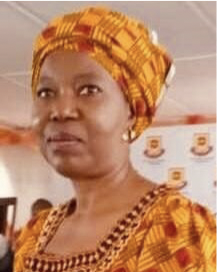 Dr Vimbisai Nhundu will now talk to us about ZANLA in Mozambique, and Janice’s work in the camps, the schools and in the media.
Vimbisai joined the struggle when she was just 16 years old. Following military training at Tembue, she was deployed to Chimoio Camp as a political commissar, and later worked with Janice at Matenje School Camp, and, after Independence, at ZIMFEP. She is currently Dean of the Faculty of Education, Social Sciences and Humanities at the Catholic University of Zimbabwe.
Sr Janice and the ZANLA Experiences in Mozambique: The Camps, Schools and Media
Reading Sr Janice’s memoir filled me with a deeper admiration and respect for this ‘woman of worth’. Although I had known her for a long time as a friend and confidante, I realised that I had not ‘really’ known her. While reading the book, I thought aloud, and said to my husband, who had known her as long as I had, ‘I don’t think that I would have treated Sr Janice as an ordinary friend, if I had known all that I now know about her’. With hindsight, I now believe that is exactly what Sr Janice wanted. She would not have wanted to be treated any differently from any of my other friends. And, I am the better for it. Thank you, Irene and Weaver Press for publishing ‘The Colour of the Skin Doesn’t Matter’.
My first impressions of Sr Janice were at Matenje, one of the ZANLA School Camps in 1978. I had
not yet fully recovered from the horrors of the 1977 Chimoio bombings which I had witnessed and where
I ran past an entire class and its teacher scattered dead under the tree which had been their classroom. I had survived by pretending to be dead, covered by my own blood and the blood of those dying by my side.
I and a group escaping with me had almost made it out of the camp that had been bombed when we were ambushed by waiting Rhodesian infantry. I still had haunting memories of the agonizing cries of those were bayonetted to death by a cursing jubilant white soldier. I was 18 years old then and that was my last image of a White person.
My emotions were tested when I met my next White person who happened to be Sr Janice. I wondered and questioned how the ZANLA leadership could trust such a person to ‘infiltrate’ our school camp. I was soon to learn why, not from any voiced defence, but from Sr Janice’s life of genuine love and caring for humanity. It was not the ‘colour of the skin’ that mattered.... Sr Janice worked with Cde Fay Chung and with us at Matenje School Camp in the teaching and learning materials production section of the Education Department. Even though she was not knowledgeable in this area of education, she was willing to learn and participate fully in all we did. She became one of us. She sought to understand, through involvement, our challenges at the camps and what would best help us ease them. We were grateful for the much needed camp supplies, the teaching/learning materials and the ‘Sr Janice’ truck which brought them to us in response to her fund-raising efforts stemming from her fact-finding visits.
Military Camp Life
I had lived in some of the military camps before joining the school camps at Chimoio and Matenje. When Sr Janice learnt that some of us had also lived in the military training camps before becoming teachers,
she sought to understand the experiences and challenges of women in the different camps and how she could be instrumental in making lives better, especially for the women and girls. There were some problems and shortages in the camps which only affected female comrades. Her compassionate and listening heart allowed for the provision of basic necessities for the women combatants and girls in many ZANLA camps in Mozambique.
The Media: Sr Janice’s quest to make a difference
Besides using her communication and media expertise for raising donor awareness to the needs of all in
the camps, Sr Janice also kept in touch with the international media, teaching the global public about the Zimbabwe liberation struggle and correcting the lies from the Rhodesian propaganda machinery. While she was with us at Matenje she also started the camp newsletter with the students and teachers. This gave students the opportunity to express themselves and reveal more openly the problems and conflicts they faced in the camps. Solutions to the challenges were presented from the perspective of both the students and their teachers. The teacher training students were also given the opportunity to participate in the writing process of the newsletter. The newsletter production continued well after Sr Janice had left because of her unsurpassed gift of teaching media and communication.
***
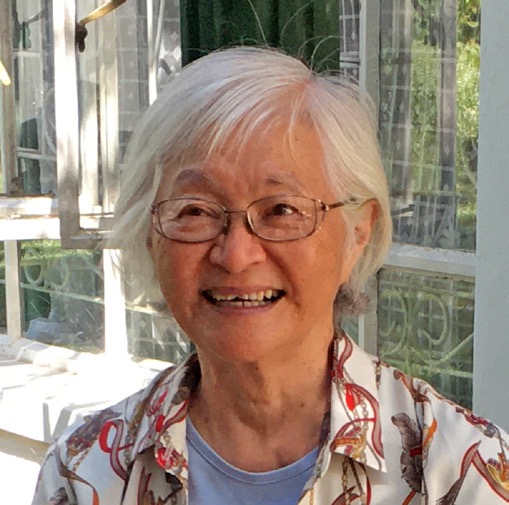 For more on the ZIMFEP schools, we’ll now hear from Fay King Chung. Fay has worked in education at primary, secondary and tertiary levels, and was Minister of Education from 1988-1992 before moving on to UNICEF and UNESCO. She is a joint founder of the Women’s University in Africa, and has been its Chair since 2004. She wrote her own memories of the liberation struggle in Re-living the Second Chimurenga, published by the Nordic Africa Institute in 2006.
Janice Education with Production
One characteristic of Janice was her total concentration and dedication to the tasks she had to undertake. One of these was the Zimbabwe Foundation for Education with Production,
ZIMFEP, immediately after Independence. ZANU came back from Mozambique with 9000 refugee children as well as several hundred war veterans who had not been enrolled into the new Army. ZAPU came back from Zambia with 3000 refugee children, and also with a number of war veterans not enrolled into the new Army. ZIMFEP tried its best to get the Government to establish schools for these returning students, but the Government very firmly refused, saying they had no finance as well as no mandate to start schools for these 12 000 students. Meanwhile these students were housed in mission schools and abandoned farms without food or shelter. Government would not provide food, shelter or education. Janice was placed in charge of establishing the ZIMFEP schools and farms on her own by Minister Mutumbuka, the new Minister of Education, who as yet had little control over his bureaucrats.
Janice whole heartedly raised food and funds from all the foundations and donors who appeared in Zimbabwe in the early days. Most of them had supported the refugees before, and understood that the newly established Government as yet had little control over its Ministries. Amazingly she was able to collect buns and other food, not really adequate for the large numbers, but enough to stave off starvation. Meanwhile the staff and students began constructing shelters from mud and grass, and soon had enough for everyone, although these were very inferior to what they had been used to in Mozambique and Zambia. However, temporary shelters and food were provided.
These were eight farms where primary and secondary schools were established, one in each province except Masvingo where ZIMFEP failed to find a suitable farm. Five farms were established in Mashonaland and three in Matabeleland. Mupfure College for war veterans job training and education was established three years later. Schools were established as soon as possible: the teachers and administrators continued without pay as they had done in the struggle. It took almost a year to raise donor funds to pay the teachers a low salary of ZWS100 a month, which they gladly accepted. It took another year for the Ministry of Education to recognise these schools for salaries for the teachers.
Meanwhile key leaders from the Liberation Movements assisted by providing resettlement land and donors provided funds for the purchase of farms on which to build the schools. Three resettlement farms were donated to Zimbabwe, two in Mashonaland Central and one in Matabeleland South. Nine others were purchased through donor funds. Construction started even though at the time the Ministry had not decided to recognise the schools and the students. Bureaucratic opposition continued for a few years.
Janice’s character profile was always to try and win support from everyone, whether they were Liberation fighters or Rhodesian bureaucrats. She was able to win over everyone slowly but surely. Eventually the schools were registered as “private schools” (80% of Zimbabwe’s post-Independence schools were registered as “private schools” controlled by the parents and communities). Private school teacher are paid by the Ministry of Education, but food and administration had to be covered by the Responsible Authority. The schools were constructed through ZIMFEP’s appointment of a qualified and experienced construction engineer, utilizing community, war veterans and students to construct the schools. these large schools were eventually registered by the Ministry of Education.
One of the early foreign volunteer groups helping ZIMFEP was Development Aid from People to People, DAPP. These were adults and students from Denmark who lived
and worked under these difficult conditions together with the war veteran and refugees. They were an important symbol that white people could live with and work with Africans. They eventually left, as they lacked technical skills.
Janice played a critical role in establishing ZIMFEP as a practical although imperfect model of Education with Production
ZIMFEP was established in the middle of the dissident challenge, and became victim of both the dissidents and the security forces. JZ Moyo guard in charge of the building materials for the school was killed by dissidents. Headmaster Muthobi at Bongolo was arrested by the security forces, suspected of feeding dissidents. Janice immediately flew to Bulawayo and managed to get him released.
***
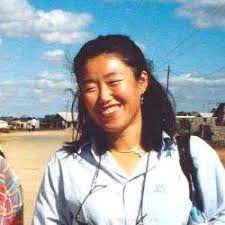
For those of us who know little about the work of the Maryknoll Sisters of St Dominic in Africa, and specifically in Zimbabwe, we turn to Sr Chiyoung Pak. Sister Chiyoung was born in Seoul, Korea and graduated from High School in Seoul in 1984. A member of a Buddhist family, she became a Roman Catholic at the age of twelve. She studied at the Catholic Catechetical Institute for two years and then became acquainted with the Maryknoll Sisters in Seoul and worked with them for four years, teaching Filipino migrants on the weekends. She entered the Maryknoll Sisters on August 4, 1995 and was assigned to Zimbabwe 22 years ago, and now lives in Norton, to the west of Harare, where she runs a youth learning centre focusing on education and a life-skills programmes for the community there.
The Maryknoll Sisters of St. Dominic is the first United States based Congregation of women religious founded in the early 20th Century for foreign mission work. Headquartered is in Ossining, New York, the Congregation began in January 1912. Mary Josephine “Mollie” Rogers (known as Mother Mary Joseph) was chosen as our leader and became our foundress. Mother Mary Joseph Rogers is seen as one of the Co- Founders of Maryknoll, along with Father James Anthony Walsh and Father Thomas Frederick Price.
By the end of the 1920’s, the Maryknoll Sisters were serving in Hong Kong, South China, Manchuria, Philippines and the Hawaiian Islands. The multicultural dimension of the Congregation was established, over the years, with women entering from Austria, Canada, China, England, Hong Kong, Hungary, Ireland, Italy, Japan, Korea and Trinidad.
In the 1970’s, the sisters began ministry in Indonesia, Southern Sudan and Bangladesh and later responded to the needs of refugees in El Salvador, Guatemala, Mozambique, Somalia, Sudan, Thailand, and the Vietnamese in Hong Kong.
Today, the Maryknoll Sisters work in 18 different countries around the world and continue /
to make God’s love visible worldwide by responding to the world needs such as: immigration, trafficking of persons, the care of Creation, the effects of HIV on communities, trauma healing, etc.)
Maryknoll Sisters in Africa, Sisters were assigned in May 1948 to Africa, specifically in Tanganyika, before Tanzania, the country was known as Tanganyika. First sisters who are missioned were Margaret May, Margaret Rose Winkelman, Joan Michel Kirsh and Mary Bows did health work, catechetics and girl’s education. Currently Sisters are doing spiritual direction, seminar and training, livelihood projects, early childhood education and young women’s training center.
In 1969 to 1977 Sisters assigned to ministry on the Kenya coast in Machako and in Nairobi. These assignments were among Maryknoll’s first expansion beyond Tanzania Borders where Maryknoll Sisters first began their mission presence in Africa.
Sister Janice McLaughlin was assigned to Kenya in 1969 and she worked in Catholic secretarial Office as a communication coordinator. She went to Rhodesia in 1977, in the midst of war, at the request of Rhodesian Catholic Bishops’ Justice and Peace Commission to serve as Press Secretary. In 1979, Sister Janice was assigned to Rhodesia/Mozambique to work as press secretary for the Catholic Commission for Justice and Peace. In 1980, Maryknoll Zimbabwe region was form. Sr. Fran Kobets came follow by Jo Kolmar, Kathi Barbee, Patty Startup, Janet Miller, Kathernie Shanon, Jo Lucker, Jeongmi Lee, Chiyoung Pak.
Our ministries vary from education, pastoral ministry,
Economic development, human rights, Women’s advocacy, human trafficking, psychotherapy in Zimbabwe.
Janice was mustard seed for our Zimbabwe region.
***
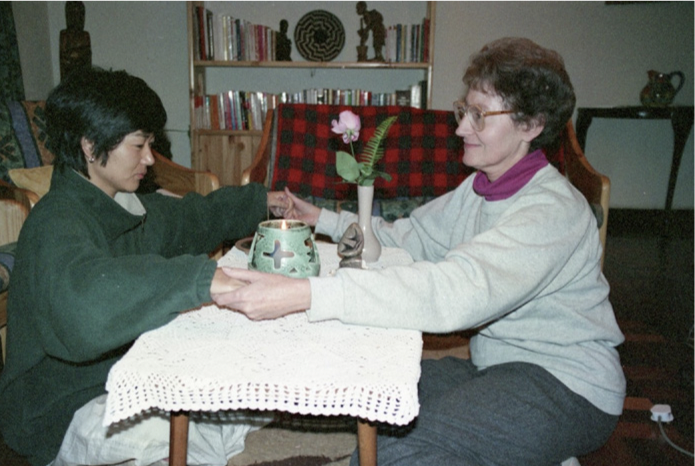
What was Janice like to work with? To answer this question, is Sr Jeongmi Lee, also assigned to Zimbabwe 22 years ago, who lived and worked with Janice in Harare. Jeongmi was a co- director of the Dance Trust of Zimbabwe’s outreach programme, and worked as a psychotherapist with the Adult Rape clinic here. She is currently with the Maryknoll Integration Community on Chicago.
We do not yet have the written text of this contribution, which will be added in due course.
***
Janice’s work in helping trafficked girls and young women to restore their dignity and self-belief is not particularly well known. To fill that gap, we invite Dadirai Miriam Chikwetekwete to say a few words.
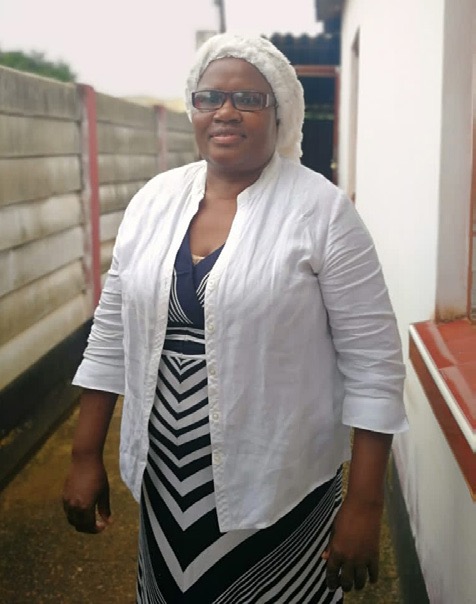
Dadirai is an adult educator with a keen interest in education and social injustice. She worked for 15 years with AFCAST – African Forum Catholic Social Teaching – and is currently at the Arrupe Jesuit University in Harare.
How Sr Janice contributed to the welfare of the girls who have been trafficked to restore their dignity and self belief
Introduction
One could never separate Sr Janice from and with social justice wherever life placed her. Sr Janice was one of the founding members of AFCAST in 1999 and it was launched at
Arrupe in 2001. Through AFCAST, Sr Janice was interested in the Social Teachings of the Church on the Environment, Constitution making and human dignity, Women, Violence and Conflict Resolution, Voices in the Wilderness: Prophetic Witness in the African church, Coming Together: Muslim Christian Dialogue on the Social Teachings, The Church in Service to Reconciliation, Justice and Peace: Preparing for the Second African Synod; Faith and Elections in Africa: A critical conversation; The church and civil society: Building social conscience for democratic participation; Imagining citizenship in Zimbabwe; Ending violence in Zimbabwe; Political Participation in Zimbabwe, Faith perspectives on migration and human trafficking; Women vulnerability in informal trading: Case of Mutare diocese and Informal mining and family vulnerability in Kenya, Zambia and Zimbabwe. In AFCAST she created a safe space for the young girls by ensuring that they had a steady and supportive healing process individually and as a group. The restoration of their dignity and their future were her concerns.
Sr Janice’s contributions with support from Maryknoll MPF and Hilton Funds for Sisters
-
Fund raised for the action and victim oriented programmes that saw the documentation of the survivors of human trafficking.
-
Documented a short film on human trafficking that is on Youtube and Arrupe website.
-
Documentary on human trafficking by Lifelines
-
Collaborated with an artist Brian Nyahuma who recorded a song on human trafficking.
-
Fund raised for the education and therapy of the young women identified during programming.
They had their fees paid to complete their Ordinary level education, professional courses and continuous therapy.
The young girls were empowered after receiving the psychosocial support and could face the challenges in their respective communities. Some of them were able to look after themselves and their families through the economic projects they were undertaking such as poultry farming, cake making, dressmaking and many others.
-
The young girls received therapy at Arrupe Jesuit University as individuals and as groups through trained counsellors and therapists.
-
When they recovered, they were able to participate in the anti-human trafficking awareness campaigns held throughout the country. The survivors moved to being advocates and this made Sr Janice proud and happy. We facilitated the process of helping them set up their own organisations Zimbabwe Trafficking in Persons Advocates (ZiTPA) led by Mrs Tabeth Masiiwa and the Trafficking in Persons Advocate Network Trust led by Ms Mukai Muparadzi. (The 2 women will share a sentence each)
-
She loved the girls so much that she would ensure that we checked on them individually and had time to chat with them on any life challenges they were facing.
-
She also made it a point that when she sourced for funds, some of them would be for sanitary ware.
-
This YouTube video <https://www.youtube.com/watch?v=JNNNlus7kKA> provides more information about the work of Afcast.
Testimony from a trafficking survivor
My name is Mukai Muparadzi, I am one of the beneficiaries of Sr Janice’s generosity. Currently, i am
a social work student studying a BSC hons degree in social work. I have grown from a victim, to a survivor and finally an advocate of human trafficking. I would like to express my gratitude to Sr Janice for strengthening me through the journey of my education. And may her soul continue to rest in eternal peace.
Conclusion
On 30 November 2020 Sr Janice send an email to the AFCAST Chairperson of the board, Fr Peter John Pearson and part of the email read “The last five years working with Dadirai to combat human trafficking have been some of the rewarding of my life”. These were powerful, honest and gratifying words coming from a phenomenal woman. It was a joy to work with Sr Janice on the human trafficking project. She always referred to our office as the Winning Team. May her soul continue to rest in eternal peace!
***
Finally, let’s hear from Ranga Zinyemba, Rector and Vice-Chancellor of the Catholic University of Zimbabwe.
Ranga’s friendship with Janice dates back to 1977. She had just arrived in Rhodesia to work as press secretary for the Catholic Commission for Justice and Peace, and Ranga, who was then president of the students’ union at the University of Rhodesia,
had been issued with a restriction order under the Law and Order Maintenance Act. Janice recalls how she was asked to buy the bus and airline tickets that would enable him to leave the country from Bulawayo, where he would not easily be identified:
“I remember sweating as I purchased the ticket, certain that the clerk at the airline office knew what I was doing and that the police
would swoop down and arrest me for assisting a supporter of ‘terrorism.’”
Tell us more, Ranga ...
Sr Janice McLaughlin the Educator, Contributions and Friendship: A Brief Overview
I am grateful for this opportunity to give an overview of Sr. Janice McLaughlin on this occasion of the launch of her memoir ‘The Color of Skin Doesn’t Matter’ (2021). Colleagues who have spoken before me from various perspectives and historical periods of Janice’s life have adequately covered her contributions as an educator, a liberation theologian, a community and organizational development practitioner, a trainer, a facilitator, a door-opener for others to see and seize opportunities for personal growth and development, a leadership succession planner and practitioner, a relentless fighter for justice and for the poor, and a life-long learner who was always open to new ideas and new ways of ministering to others.
Firmly centred in the charisma of Maryknoll Sisters, Janice straddled both the Pre- and Post- Vatican 11 world-views, and showed that there are endless possibilities not only for the religious like herself, but indeed for everyone, to effectively serve and minister to the needs of others if one uses as starting point the expressed needs of the people, rather than the needs of the service provider. Her story about the people of remote Binga District in Zimbabwe regarding their needs as opposed to what she and her colleagues at Silveira House
had envisaged is very revealing. Janice interrogated tradition. She embraced tradition. She experimented. She learned. She put into effect her learnings. She looked at issues using multiple lenses. She was honest about her own feelings, including her shortcomings. In her memoir, she talks about her own naivety and inexperience on occasion, and openly expresses the pain and shame she felt when she feared she had
placed others in danger, especially after her diary was read in court in Zimbabwe and after the publication Propaganda War in Rhodesia was leaked before revisions were finalised.
Let me now, from a personal perspective, say a few words about friendship, Janice’s capacity for initiating, cultivating and sustaining friendship.
If I were to ask my students to analyse characters mentioned in Janice’s memoir, the people she interacted with in her ubiquitous life, the students would ask: where do we begin? The memoir is replete with hundreds of people whom Janice worked with and befriended during the 79 years she lived on this earth, friends in elementary school, in high school, at university and at the Maryknoll Centre in the United States during her training; friends in the Maryknoll community scattered throughout the many countries of the world in which they worked; friends in Kenya; friends in Tanzania; friends in Zimbabwe; friends in Mozambique, friends in South Africa. Yes, indeed, my students would be right to ask: where do we begin?
Janice arrived in Rhodesia one and half weeks before I was issued with a restriction order by the then Minister of Law and Order. I was president of the Students Union at the University of Rhodesia and a member of the Catholic Commission for Justice and Peace. I was in danger of being sentenced to death if I had been convicted in a court of law for assisting the guerrillas who were fighting for independence. There was overwhelming evidence for such a conviction in my office at my Students Union office at the University. As Janice explains on p.51 of her memoir, she was asked by the Justice and Peace Commission to purchase an airline ticket for me to enable me leave the country from Bulawayo where I was not likely to be identified easily. In her memoir, Janice also talks about the humble marriage ceremony I had with my then girlfriend at the University of Rhodesia, Alice, half an hour before I was to leave the country. Janice describes in some detail how Bishop Dieter Scholz conducted the ceremony at which Janice and Bro. Arthur Dupuis were the only witnesses. That was the beginning of a friendship that was to last for 45 years until Janice’s death on 7 March 2021.
Janice was deported from Rhodesia soon after my departure. She visited me in Sheffield, England,
where I was now studying. I moved in with a friend next door while she stayed in my apartment during the weekend of her visit. The weekend was very busy for her as our group of students from Rhodesia and other African students had lined up for her talks and interactions with ourselves and organizations that supported Rhodesian refugees in Mozambique and Zambia. This was before Janice had gone to Mozambique to work among the refugees.
Around that time, Dieter Scholz and Bro. Arthur were also deported from Rhodesia.
After Zimbabwe became independent, we all returned to the new Zimbabwe with the exception of Bro. Arthur who had sadly passed on.
On December 6, 1997, Alice and I this time conducted a ‘proper’ wedding at St. Gerard’s Parish in Borrowdale, Harare, 20 years after our hasty marriage ceremony in Chitungwiza where I was in hiding. What a pleasure it was for us to have both Janice and Dieter at the wedding, Dieter performing the roles of marriage officer and co-celebrant of our wedding Mass with George Webster, our parish priest.
In 2014, Janice invited Alice and I to visit the Maryknoll Centre in New York. We spent the weekend at the Centre interacting with Maryknoll sisters and Maryknoll fathers and getting to appreciate the great work they do around the world.
In July 2017, Alice and I celebrated our 40th wedding anniversary here in Harare. Janice cut short her visit to the United States and arrived in Harare the day before the celebrations to play the role of guest speaker.
After Janice completed her stint as president of the Maryknoll sisters and returned to Zimbabwe in 2014, I invited her to work with us at the Catholic University. She was not too keen to teach a class of students, but chose to work with our Research Board. One of her many accomplishments in this role was the organization, fundraising and hosting of the Catholic University’s international conference on migration. The conference was attended by all the Bishops of the Catholic Church in Zimbabwe, representatives of academic institutions from Zimbabwe and the Southern Africa region, development partners and UN agencies including the International Organization on Migration (IOM). Cardinal Turkson from the Vatican was the guest speaker. The conference laid a basis for courses on migration which the university is developing.
I cherish the friendship I (and my family) had with Janice for 45 years. Every day in my office I look at the wooden crucifix that Janice gave me as a present for my new office just before she left Zimbabwe for the last time and I feel immensely blessed.
Ours is just but one out of many stories of enduring friendships with Janice. Given the opportunity, hundreds of other people would be able to articulate similar friendships which they had with Janice. Such friendships ranged across all spectra in society, from the ordinary men and women of Tafara Township in Harare’s high-density and low-income suburbs, Bishops such as Bishop Dieter Scholz (Bishop Emeritus of Chinhoyi in Zimbabwe), Bishop Desmond Tutu (Bishop Emeritus of Cape Town, South Africa), Bishop Mandlenkosi Zwane of Swaziland (now Eswatini), to public figures and politicians like Nancy Pelosi, who was later to become the powerful speaker in the Congress of the United States of America and Julius Nyerere, the founding president of Tanzania.
Janice was a friend to many: may her soul rest in peace.
Geoff Feltoe, a lawyer, was a member of the Catholic Commission for Justice and Peace in Rhodesia in the seventies. We were fortunate that he was abler to join our discussion and make the following contribution.
Janice and the CCJP
Janice was a quite remarkable person who gave so much to others and inspired so many people with her warmth, compassion and energy.
In 1977 the liberation war was raging. This was a difficult and perilous time for the Commission. One of the issues that was being hotly debated in the CCJP was whether the Commission should publicly proclaim that the liberation fighters were waging a just war to overthrow an oppressive regime. Some urged caution arguing that such a public proclamation would probably lead to the closure of the Commission and this
would mean that it would not be able continue to expose the excesses of the Rhodesian Forces. Others argued that we could not continue to skirt this issue.
Janice was a radical and she had no doubt about what the public stance should be. When she was arrested under the Law and Order (Maintenance) Act she knew full well what penalties she could face as she had just been conducting research on this draconian legislation. She was eventually brought before a magistrate for a bail hearing. Her lawyer had strongly advised her to remain silent and let the lawyer to do the talking. But Janice could not hold back. When asked if she supported terrorism, she told the magistrate that the freedom fighters were not terrorists and they were fighting a just war. The magistrate condemned her to the most dreadful crime of being a communist.
Unfortunately, Janice in her naivety had kept a diary which was found in her room. This diary, some of which was published in the Rhodesia Herald, contained information in it could have compromised a number of people. In the book she apologises for her lack of security awareness. I also mentioned that when Ranga Zinyemba suddenly departed with Janice’s assistance, we had to quickly remove and hide from his SRC offices some very sensitive files which would have been very dangerous if they had been discovered before his departure .
When Janice returned to Zimbabwe we remained good friends and I have a fond memory of going with her to Mana Pools and canoeing together on the Zambezi. She gave me a framed photo of us in the canoe which had been taken by one of the other sisters who was with us,
The End